
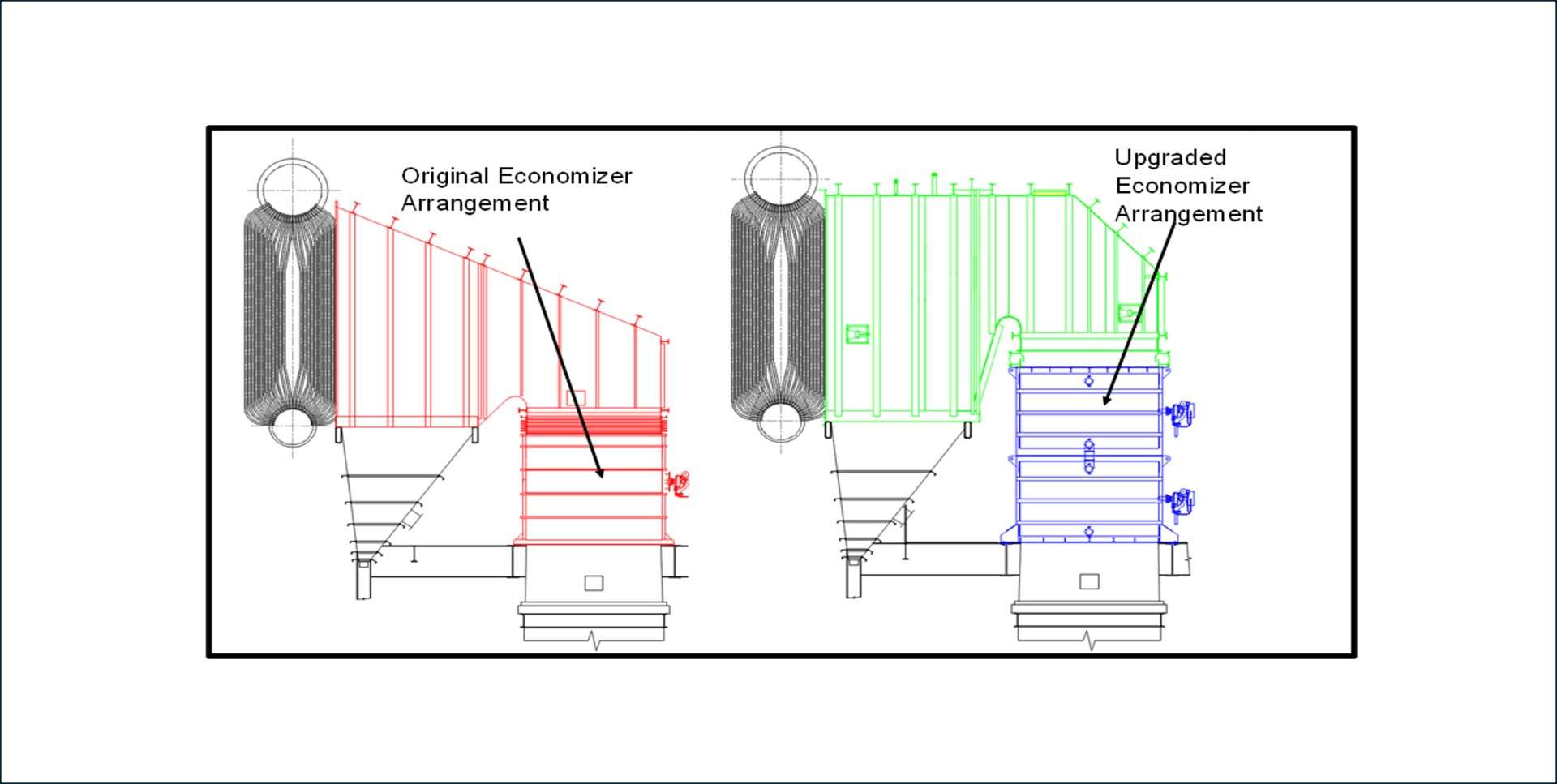
The amount of steam generated by a boiler is strongly dependent on two main attributes: the heat capture efficiency of the boiler’s convective sections, and the effectiveness of the furnace combustion system in achieving complete fuel burnout. But there’s more to the equation.
Steam generation rates are also a function of the temperature of the feedwater entering the boiler steam drum. Hotter feedwater temperatures supplied to the drum result in increased steam generation rates for the same fuel firing rate. Therefore, even with all other process parameters remaining constant (i.e., combustion system efficiency and heat capture characteristics), boilers that are equipped with feedwater heaters generate more steam for the same fuel firing rate than boilers without. Increasing the feedwater temperature entering the steam drum is thus a key pathway to maximizing boiler steam generation.
However, there are some practical limits to how much feedwater can be heated. These limitations are due to detrimental natural circulation conditions that can occur if the feedwater temperature entering the drum is too close to the drum saturation temperature. Natural circulation issues can result in tube overheating and failure.
Hotter feedwater temperatures can also detrimentally impact the performance of sweetwater condensers (SWCs). Supplying colder feedwater to a SWC increases its capacity to condense saturated steam, which is then sprayed in the intermediate stages of the superheater sections for steam temperature control (attemperation). Inadequate SWC condensing capacity can lead to insufficient attemperator spray water flow, which may result in an inability to achieve the final steam temperature setpoint and cause overheating and damage in the superheater tubes and steam supply piping.
Therefore, as boiler operators pursue pathways to increase feedwater supply temperatures to maximize steam generation rates, a holistic evaluation of heat transfer and SWC condensing capability is needed to optimize the increase in feedwater temperature without compromising natural circulation or superheater performance.
A recent example of such a holistic evaluation is a comprehensive boiler upgrade provided by Jansen at the Domtar paper mill in Plymouth, NC, USA. At this mill, Jansen designed and supplied a larger economizer to optimize heat capture. Although this economizer radically improved heat capture and lowered flue gas exit temperatures, Jansen’s analysis revealed that the increase in the outlet feedwater temperature from the new economizer would hamper the ability of the downstream SWC to condense the required amount of steam for adequate attemperation. A solution to this problem was achieved by redesigning the feedwater circuit so that feedwater from the feedwater pumps flows into the SWC before the economizer. The cooler feedwater temperature entering the SWC increases the unit’s condensing capacity and satisfies the boiler’s attemperation requirements at the new increased steam generation rates. Feedwater leaving the SWC then passes through the new/upgraded economizer before entering the boiler steam drum. This feedwater circuitry change has allowed the existing SWC to be retained as part of the upgrade.
As plants consider pathways to increase feedwater temperature to optimize heat capture and maximize steam generation rates, a detailed analysis of the heat capture performance of the boiler’s convective sections must be performed to ensure that supplying hotter feedwater to the drum won’t result in a unexpected “butterfly effect” that leads to tube overheating and failures or superheater performance limitations.
Jansen has the capabilities to not only optimize your combustion processes but also maximize the capture of the hard-earned heat that was generated from your fuel. Our philosophy is that behind every successful upgrade lies in-depth data analyses, root cause identification, and development of appropriate design solutions. We also provide full engineering, supply, and installation of the required upgrades along with planning and start-up support to fully implement these solutions.
Click here to contact us to discuss how we can help you realize your goals of maximizing steam generation from your boiler system.
Authors: Samit Pethe – Manager, Process Technologies and Morgan Silverman – Process Engineer