Blog

Reducing CO Emissions with OFA System Upgrades, Part 2

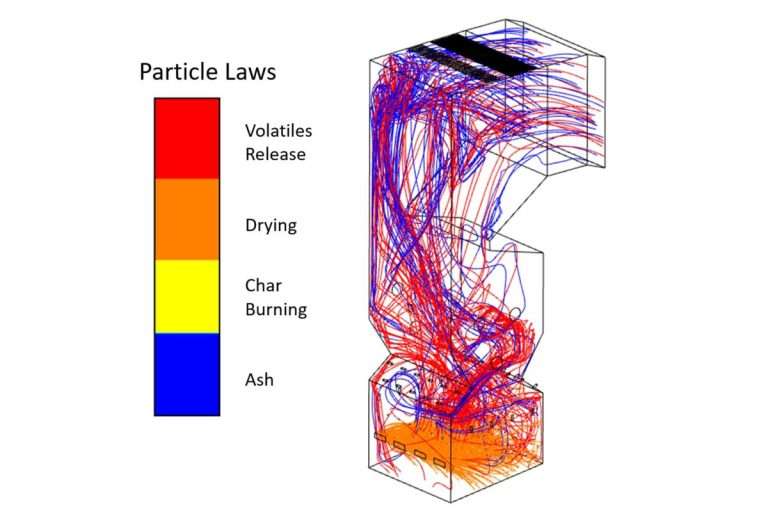
In part 1 on this topic we presented basic principles of combustion and air system design to show potential benefits of an overfire air (OFA) upgrade. In Part 2 we present data from several of Jansen’s recent OFA upgrades to show measurable reductions in carbon monoxide (CO) emissions. To review,
Read More »

Reducing CO Emissions with OFA System Upgrades, Part 1

Operating with an effective overfire air (OFA) system is key to optimizing the combustion process in a biomass boiler and reducing its carbon monoxide (CO) emissions. This post will discuss the basics of combustion optimization and OFA system design. Part 2 will focus on the measured reductions in CO from

Read More »

Tubular Air Heater Corrosion: Evaluation and Prevention

When maximizing boiler performance, the main hindrance can often be within the boiler backpasses. Over time, the economizer, tubular air heater (TAH), dust collector, and other backend equipment can erode, corrode, exhibit air in-leakage or have other performance issues that negatively impact the efficiency of the boiler. One common issue

Read More »

Analysis of CNCG Incineration in Recovery Boilers

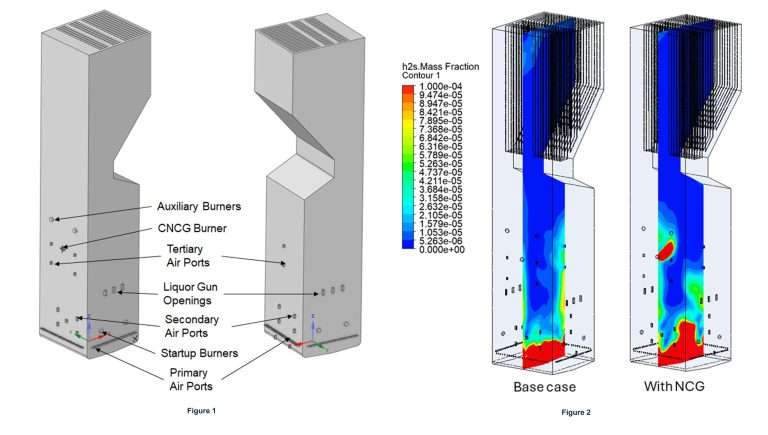
Jansen recently supported a client in South America in their desire to incinerate concentrated noncondensable gas (CNCG) in their recovery boiler. Our efforts used computational fluid dynamic (CFD) modeling capabilities to evaluate potential impacts on furnace combustion conditions. Of specific interest to the client was how incinerating CNCGs would alter

Read More »

Combustion Optimization: The Give and Take Between CO and NOx

For most boilers worldwide, environmental permitting agencies mandate that carbon monoxide (CO) emissions must be maintained below a prescribed limit. But boiler operators shouldn’t monitor CO just for environmental reasons; CO is also a measure of the effectiveness of the combustion process. From a thermodynamics standpoint, the energy released from

Read More »

Superheaters – Analyze First. Then Design for Success.

A result of poor superheater design (Photo1). Superheaters in power generating boilers play a critical role in sustaining maximized power generation and overall boiler performance. Superheater design not only impacts the final steam temperature but also the expected steam drum pressure, the potential for elevated tube temperatures, corrosion and erosion

Read More »

Jansen acquires Lundberg, LLC

Jansen has acquired the Redmond, Washington based Lundberg, LLC, formerly a division of LDX Solutions. Founded in 1976, Lundberg specializes in the design and supply of custom solutions including engineering, systems and equipment for the process industries to meet each client’s unique needs. The acquisition includes Lundberg offices in both

Read More »

How Hot Can You Go? Boiler Feedwater Supply Temperature, Part 1.

The amount of steam generated by a boiler is strongly dependent on two main attributes: the heat capture efficiency of the boiler’s convective sections, and the effectiveness of the furnace combustion system in achieving complete fuel burnout. But there’s more to the equation. Steam generation rates are also a function

Read More »

Incinerate NCG and SOG in your Boiler

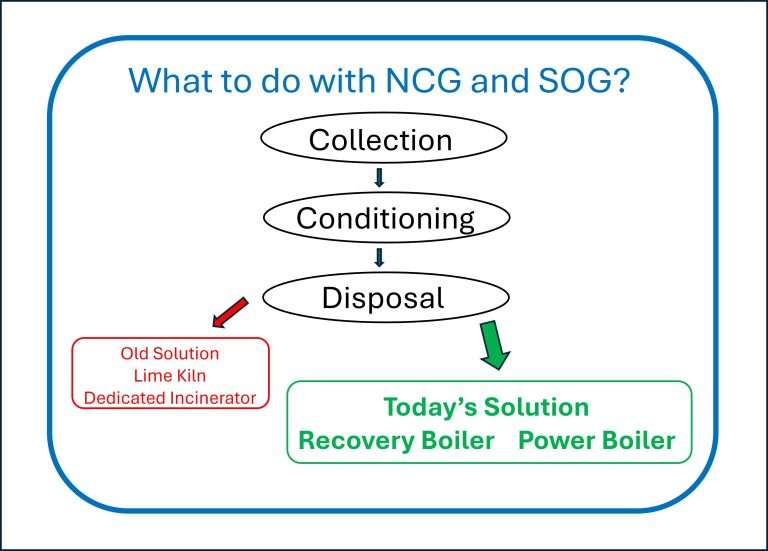
A growing trend for kraft paper mills is to use an existing power or recovery boiler for destroying noncondensable gas (NCG) and stripper off-gas (SOG.) This is a viable alternative to burning them in the lime kiln (where it can cause production problems) or in a dedicated incinerator. The effectiveness

Read More »

Don’t Heat the Sky! Maximizing Heat Capture In Boiler Systems.

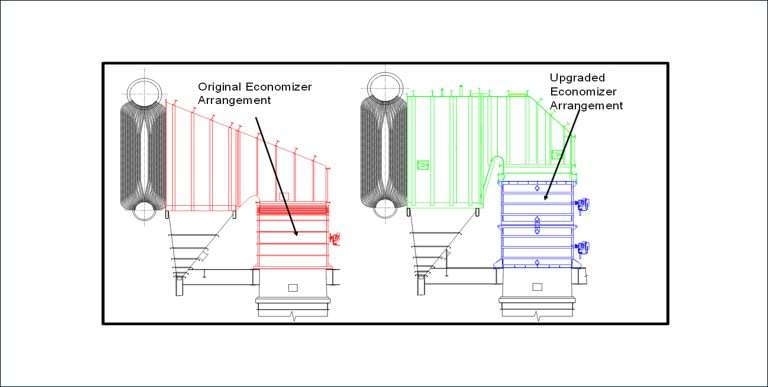
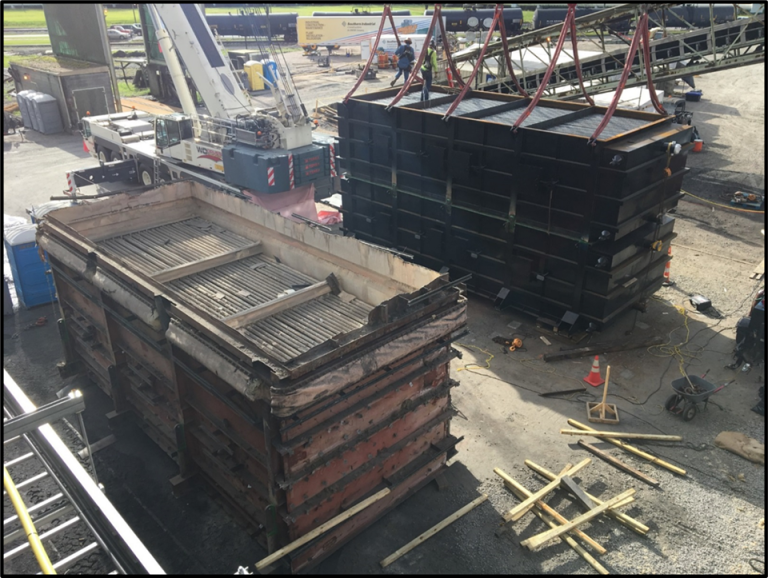
New, larger economizer ready to be installed in Plymouth, NC. Old economizer in the foreground. Combustion efficiency and heat capture efficiency are two important factors to consider when analyzing a boiler’s overall operating efficiency. Combustion efficiency relates to how effectively a boiler furnace and combustion system is able to combust

Read More »