
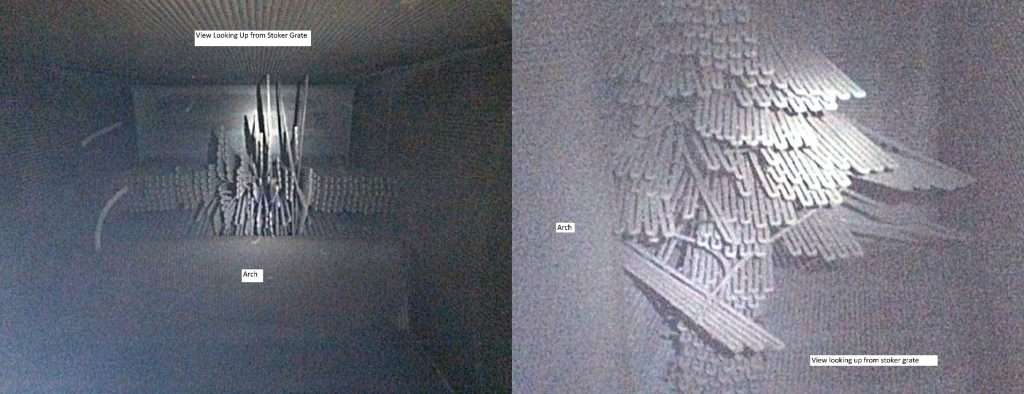
A result of poor superheater design (Photo1).
Superheaters in power generating boilers play a critical role in sustaining maximized power generation and overall boiler performance. Superheater design not only impacts the final steam temperature but also the expected steam drum pressure, the potential for elevated tube temperatures, corrosion and erosion resistance, and the superheater’s ability to provide rated performance over years of operation. Each of these factors must be considered when designing a superheater.
The thickness of the superheater tube walls must adequately support the temperature and pressure of the steam inside the tube and the flue gas temperature outside the tube. The selection criteria of the tube materials must be thorough and based on flue gas composition and temperature analyses at the superheater sections, as tube metal type affects the resistance of the superheater tubes against corrosion and erosion from the flue gas.
A superheater design needs to be robust enough to not only accommodate the boiler’s typical operating conditions but also the variations and upsets that are often encountered in boiler operations. It must consider imbalances in the flue gas temperature profiles, flue gas flow profiles, and steam flow profiles across the superheater pendants. Calculations that consider these variations should be completed to get a more complete picture of the operating conditions. The selection of the appropriate metallurgy and wall thickness of the superheater tubes depends on understanding this picture.
A recent example illustrating an inadequate superheater design is of a boiler on the U.S. West Coast, which was plagued with chronic superheater failures immediately following its commissioning. After a catastrophic failure of the tubes occurred six months after commissioning (see Photo 1), the client realized that the superheater failures were not due to a lack of maintenance but related to improper design. At this point, the client contacted Jansen for a solution and we performed a holistic detailed analysis of this superheater design. Our analysis determined that about a third of the superheater tube materials and wall thicknesses chosen by the original manufacturer did not meet Jansen’s superheater design criteria. Our analysis also concluded that the design lacked proper support of the intermediate tube pendants, which made the tube bundles more susceptible to deflections.
After reviewing the results of this analysis, the client contracted Jansen to design and supply a new superheater to replace the existing unit. Our new superheater design (see image below) featured upgraded tube thickness and metallurgy throughout the pendants, Inconel™ overlay in the areas most susceptible to erosion and high heat fluxes, and a new support mechanism with the intermediate tube loop supported from the boiler roof structure. Since the commissioning of the Jansen superheater, boiler uptime has increased, and there have been no occurrences of superheater-related downtime.

As plants continue to maximize power generation from their boiler operations, superheater performance must be a critical area of focus. Apart from performance-related deficiencies such as the inability to control the final steam temperature setpoint, insufficient attemperator capacity and elevated steam drum pressures, improper tube material and thickness selection is often revealed during visual inspections. Deficiencies that are not addressed in a timely manner can lead to catastrophic failures such as those demonstrated in this example, which cost the plant a long and expensive downtime as the new superheater design was developed and installed.
Jansen holds the ASME “S” stamp and the NBIC “R” stamp for the design of pressure parts and will custom design and supply a superheater that meets your needs. Contact us to start the conversation.
Authors: Morgan Silverman – Process Engineer and Samit Pethe – Manager, Process Technologies